
Picture someone who runs a small bakery. Good cakes, solid reviews. Then one evening a customer says, “I asked an AI for the best birthday cake places nearby, and you weren’t on the list.” They go quiet. How that list got made, or how to even see it, they have no idea.
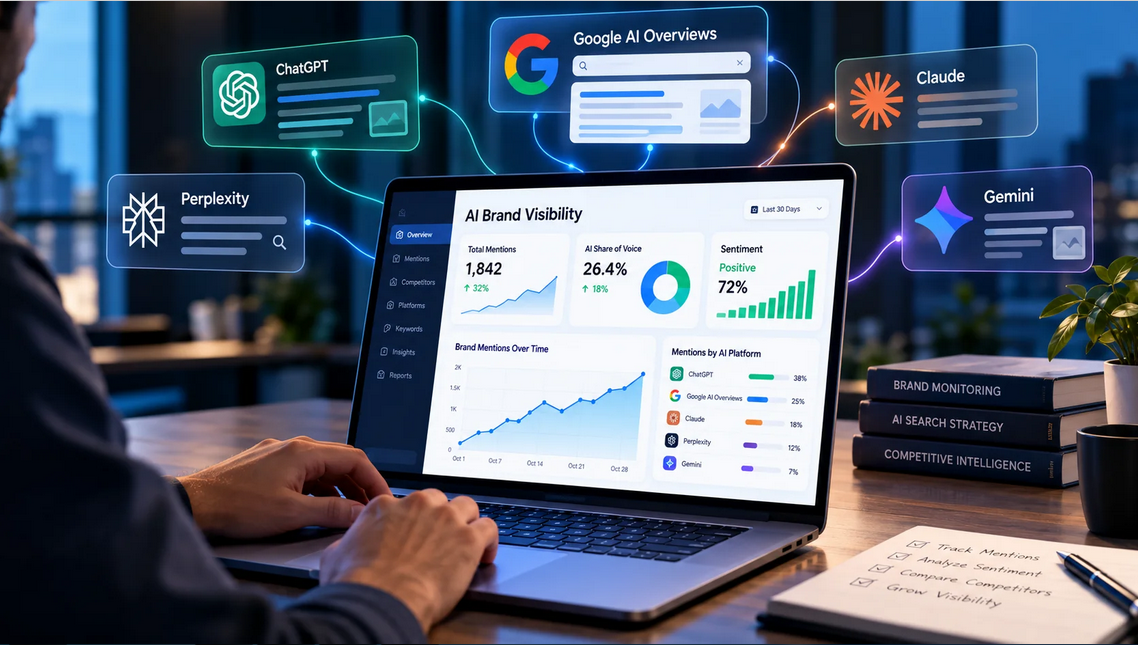
That’s the gap many business owners run into. Regular search hasn’t gone anywhere, but more people now ask a chatbot a question and just take the first answer. Say a business wants to track ai search visibility. It helps to know what that means, what a basic check looks like and what to do when the numbers look wrong. All of that’s covered here. And no fancy tools are needed.
What’s it, really?
The thing that counts is whether a chatbot names a business when a question comes up that the business ought to answer. Nothing more. No score, no magic number.
It’s like when a friend asks where to eat. A few spots pop into your head right away. Plenty of others never cross your mind at all. A business wants to be that first one you think of.
It is tricky to nail down because search results stay pretty steady minute to minute. Chatbot answers? Not so much. Same question twice, different list. Slight rewording, different again. One check on its own doesn’t prove much. What tells you more is a pattern across a bunch of checks.
A basic check anyone can run
Begin with actual questions customers would ask. Not corporate language. Everyday talk. “Best bakery for eggless cakes near me.” “Who makes custom cakes near me.” Ten to twenty questions covers it.
Then ask each one. Write down what comes back. Is the business named? Where in the answer? Who else pretty shows up? Is anything about the business wrong?
Keep it basic with a spreadsheet. Column for the date, one for the question, the chatbot’s name, and what came back.
Read More: Critical Illness Insurance: What Is Covered, What Is Not, and How Does It Work?
Do it again a few weeks down the line, and that’s when you’ll see the pattern. What to watch for
Mentions are the starting point, though they don’t tell the full story. A couple of other factors count as well.
Accuracy matters. A chatbot could give out stale hours, a location that’s closed, or the wrong city entirely. And that’s a real problem, because customers take it at face value.
Competitors matter. When the same two names keep showing up, ask why. Could be they’re cited on more sites, or their info is just easier to locate.
Where a chatbot pulls its answer from counts too. When it shows links, those hint at which pages seem to matter.
Why a business gets skipped
This exact way these answers get built isn’t something anyone outside the companies can see, so what follows is educated guessing. Even so, a few patterns tend to show up.
Read More: AI in Life Sciences: How AI Improves Commercial Decision-Making
A bare website and a few reviews leave a chatbot with almost nothing to go on. That’s the first problem: thin information. Conflicting details cause trouble too, like one site listing a phone number and another showing a different address. Then there’s the business that hardly gets mentioned beyond its own pages, which just makes it look small.
On an end note
Chatbots have turned into the front door for a lot of customers. Nobody’s steering them, and no one really gets how they work yet. Still, a business can watch them, keep records, and patch what breaks. Most companies aren’t even doing that much.